fbpx

Dummies’ guide to Cooking Tools

< Back to Guides and Tips

Dummies’ guide to Cooking Tools

Cooking utensils are simply tools needed for food preparation and cooking. There are many different types of cooking tools and the right ones will help you in your cooking. Stock up on the essential items first before investing in other specialty tools.

Here are 4 tips to help you get started on your kitchen needs.

1. Define your purposes
Consider how much time you spend in the kitchen in order to decide the variety of kitchen utensils to have. For those who occasionally whip up a meal at home, getting the basic tools will suffice. For cooking enthusiasts, investing in specific utensils will save you precious time and lets you focus on cooking a great meal.  You need not invest in a set and picking a few quality utensils will be more rewarding.

2. Pick the items that are versatile
For starters, choose tools that are always used in most of your recipes. Here is a list of kitchen utensils that can be used in any cooking.

Ladle
Get at least one with a mouth about 3-4″ wide for serving soups, or moving hot liquids like spaghetti sauce from pot to pot or to a serving bowl without pouring, spilling, and scalding. If possible, get one with the hook so that you can hook the ladle on the pot while cooking.

Long handled spoon and fork
The spoon is used for stirring sauces or soups while the fork is used for stirring pastas or noodles.

Spatula
Good for stir-frying, flipping pancakes on the griddle, and scooping from deep containers. The most important function will be to keep the heat away from you when you are cooking.

Measuring cups and spoons
Helps to get precise proportions of ingredients. One point to note is that dry and wet measuring cups are different. Most measuring cups and spoons come in a set.

Grater
A flat surface which comes with different cutting surfaces ranging from fine to coarse. Instead of slicing with a knife, you can just slice it with the grater and obtain more consistent results.

Peeler
A safer and faster alternative to peeling with a knife. Peel apples and carrots in no time.

Kitchen scissors

Differs from the usual scissors as it has a longer blade and one side of the blade is serrated which can cut through meat or fish. Usually made of stainless steel which prevents rust and requires low maintenance.

Chopping board
It is important to have at least two chopping boards, one for meat and the other for vegetables and fruits. This prevents germs from spreading. A sturdy, non-slip board will benefit you tremendously.

3. Materials of utensils
Most utensils are made from wood, stainless steel, silicone, aluminium or Teflon. Choose the material which can complement your cookware and other kitchen equipment. Ensure that the material selected will not scratch your pots and pans. The most common mistake is to use utensils made of metal on non-stick surfaces which can damage the surface.  Also, ensure that wooden utensils are sanded smooth and nothing can splinter into the food.

4. Special features
There are many specialty kitchen utensils which you can purchase if cooking is your passion. Kitchen thermometers can be used to check the doneness of the meat while zesters can be used for making garnishes. A aortar and pestle is handy for grinding fresh and dried herbs or making your own paste.

5. Storage for utensils
Having a tall vase or container beside the stove would be an ideal spot for storing your kitchen utensils. Otherwise, put them where it is within reach and ensure the chosen spot is not damp to avoid mould and breeding germs.

Pizza Tools 101


< Back to Guides and Tips

Pizza Tools 101


Nothing beats a baked pizza fresh out of the oven. With the right equipment, your homemade pizzas can look and taste like it came out from an Italian bistro! Amazingly, investing in a few essential pizza tools will exponentially enhance the results of your pizza.

Here are 4 commonly asked questions to help you become a professional pizza baker.


1. Pizza Stone VS Pizza Pan?

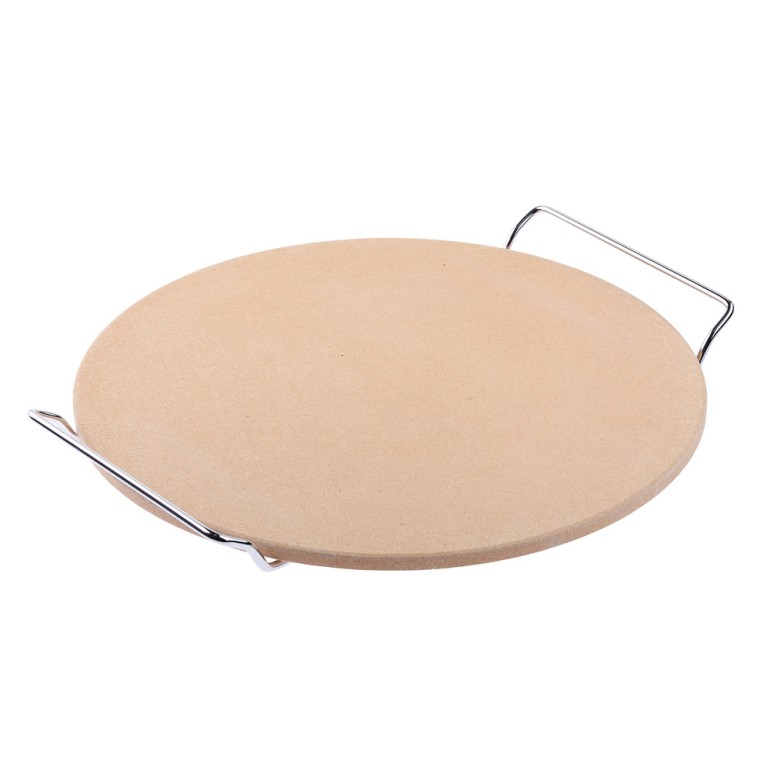
To avoid having a soggy crust, it is highly recommended to use a pizza stone. The pizza stone absorbs the moisture from the dough and distributes the heat evenly throughout the pizza, resulting in a crispy crust. However, you would need to preheat the pizza stone for an hour before putting the pizza on it.

Pizza Stone with Base by Ibili (Retail Price: $44.90)


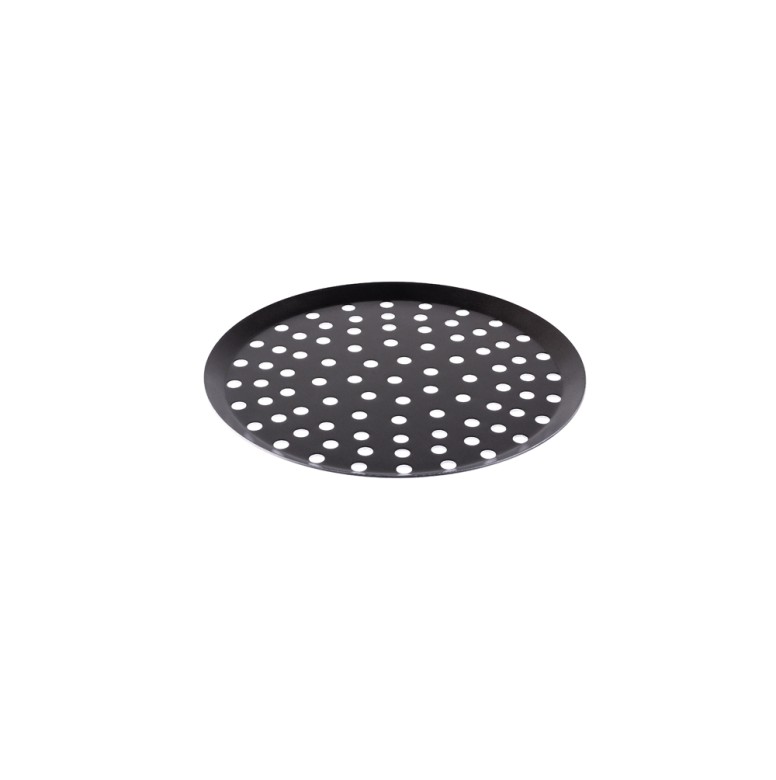
A pizza pan, on the other hand, is commonly seen with a perforated base, which allows heat to be in direct contact with the pizza, resulting in a crispy golden brown crust. This pan does not need preheating which makes it more convenient.

Aluminium Non-Stick Round Perforated Pizza Tray by de Buyer (Retail Price: $28.90)


2. Stand mixer or kneading by hand?
Kneading by hand is the traditional approach where you repeatedly fold and press to create gluten with an equal distribution throughout the dough. Those who want to have a better feel for the texture of the dough would appreciate this method. While current technology is able to replace manual kneading, it is impossible to completely mimic the manual kneading action. However, this approach is more time-consuming and tiring on the hands and wrist.

A stand mixer is a good alternative to manual kneading as it is slower than a food processor which means that we can still observe the development of the dough and it will not break down the gluten strands. Convenience is one its main strengths: You can preheat the oven, prepare other ingredients while letting the mixer knead the dough. The only downside for this machine is that the gluten strands created by the mixer follows the spiral pattern of the dough hook instead of random patterns which can only be created by manual kneading.

3. What type of peel will match your kitchen?
A pizza peel is a large flat paddle with a long handle used for transferring the uncooked and cooked pizza in and out of the oven. This will only be essential if you prefer baking your pizza on a pizza stone.

Shape
Generally, there are two kinds of shape for pizza peels, square and round. The square shaped peels would be better for home kitchens as they match the shape of our conventional ovens. Round ones are more suited for restaurants using large ovens with small openings.

Material
Wood has the advantage of preventing the dough from sticking onto the peel which minimises damage to the precooked pizza. However, wooden pizza peels tend to be thicker which makes it harder to slip it under the pizza when taking it out of the oven. Maintaining it can be a hassle as you have to ensure the peel is dry before storing to prevent warping. Mineral oil has to be regularly used as polish for the peel to prevent it from absorbing odours and stains.

Metal peels are easy to clean and long lasting. The thin blade also allows easier handling of the pizza. However, metal peels tend to have the dough stick onto its surface, but this can be overcome by dusting it with flour beforehand.
Another important thing to note is the length of the handle. Ensure that the handle is long enough to reach to the end of your oven.

4. What other equipments can enhance the pizza making experience?
Rolling pin
A rolling pin is a must if you do not intend to stretch or toss the pizza dough. Choose a rolling pin that fits nicely in your hands and is easy to maneuver to ensure perfect flat dough.

Rolling/French Pin by Epicurean (Retail Price: $78.38)


Pizza Cutter
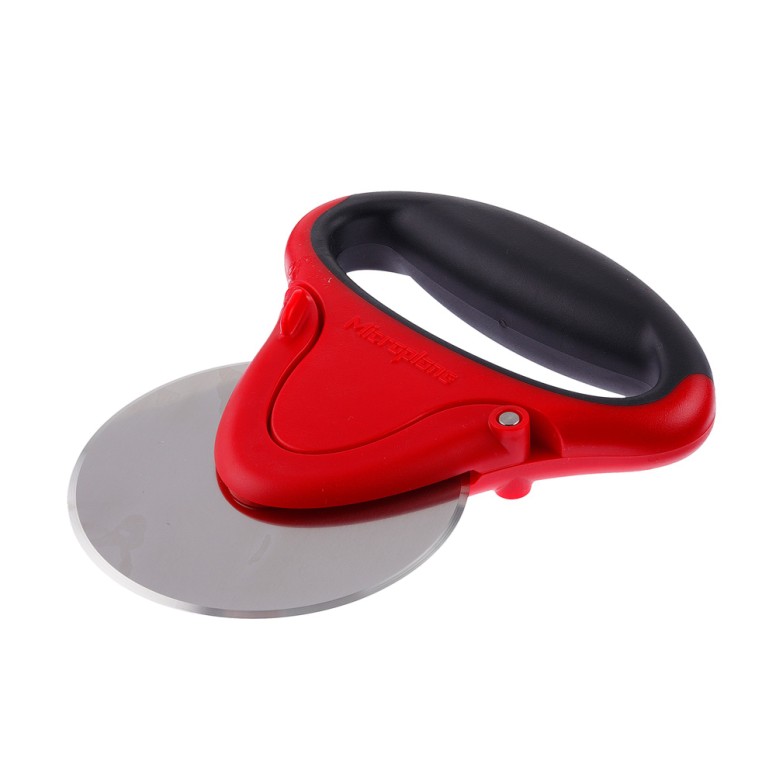
It is easier to slice up a pizza using a pizza cutter. We recommend getting a cutter with a large wheel (approx. 4 to 6 inches) so that you can cut the deepest areas with ease. A large handle is a plus point towards easier application.


Choosing and Buying Food Processor

< Back to Guides and Tips

Choosing and Buying Food Processor

Having a food processor in the kitchen is like having a personal helper. This capable countertop appliance can do almost anything: chopping, slicing, grating, grinding and for certain advanced models, it can even cook your meal!

Here are some common food processors found in the kitchen:

Grinder: A food processor that grinds various food items like spices, nuts, grains and coffee. The shape of the blade is designed to pulverize all items into fine powdered form and there are different blades which creates fine and coarse grinding.

Juicer: A special type of food processor that extracts juices from fruits and vegetables. What sets juicers apart from similar appliances is that it separates the juice from the solid residue, giving filtered and delicious juice.

Mixer: A basic processor, mixers are meant for mixing numerous food items for a particular recipe. They can chop, slice and shred depending on how you need your ingredients prepared. The other add-on blades provided are for dough kneading and cutting soft items like tomatoes and ripe fruits.

Chopper: This machine primarily does cutting and chopping for vegetables, nuts and spices. A chopper allows you to have nicely-chopped ingredients instead of paste.

Blender: Works best with liquids and therefore its main functions are emulsifying, liquefying and pureeing. [See our “Guide to buying blenders “for more information].

All-in-one processor: As the name suggests, this machine can do practically all of the operations described above.  Such processors usually come complete with bowls, spatulas, blades and covers for extra convenience.

A few points to take note when selecting a food processor:

Capacity: Most processors range from 2 to 14 cups in capacity. In most kitchens, it will be useful to have two food processors, a small one for grinding or pureeing baby food (usually in small amounts) and a bigger one for chopping and slicing bigger portions. Commercial-grade processors usually have a capacity of up to 20 cups to cater to bigger volumes needed in professional food preparation.  Usually the stated capacity on product brochures or advertisements does not include liquid capacity. A 7-cup capacity can hold about 4 – 5 cups of liquid.

Power: A high-powered motor rating might look impressive as you get the impression that this reflects how easily the processor can process the food within a fraction of a minute. However, what really counts is how efficient the power gets transferred to the blade. If only 75% of the power is transmitted, the rating is of little value. For a peace of mind, choose a well-known brand which usually offers substantial power with strong couplings to give it maximum efficiency.

Speed: Most processors have at least one speed and a pulse function. More advanced features could include up to 4-speed variation controls which can take on heavy duty tasks. Pulse function is useful for a food processor as it allows you to instantly power up the machine and switch it off for tasks like mixing dough.

Cleaning and maintenance: For easy maintenance and convenience, check if your processors are dishwasher-safe. Sometimes, food might get stuck in the small crevices on top of the small slicer disc which will cause a stench after a few days. To be on the safe side, check reviews on the product’s functions and ease of maintenance before purchasing it.

Over the years, home appliances, like other electronics, have also benefitted from improvements in technology. Cuisinart’s Hot & Cold blender and HotmixPro are two technological marvels that can create magic in the kitchen.

Cuisinart Hot & Cold Blender

Ever imagined a blender that can make soup with a touch of a button? Cuisinart’s Hot & Cold blender not just performs standard blending tasks with aplomb; it can cook soup from start to finish in 20 minutes! What makes this blender unique is its non-stick heater plate which doubles up as a sauté pan.

With a 1000W motor, this powerful blender with stainless steel blades can make perfect dips, purees, dressings, porridge, cocktails and crushed ice. So, making soups, sauces or icy cold smoothies can be done without you breaking a sweat. Enjoy the convenience of using only one machine that can chop, cook, and blend without the need for other appliances or having to do it manually. You can even add ingredients into the blender anytime during the cooking process and not worry that the results will not be impeccable. A recipe booklet is included with purchase.

Retail Price: $552

HotmixPro Gastro

The HotmixPro Gastro is a commercial-grade, innovative and multi-functional thermo blender designed to operate both as a mixer for blending and as a cutter for chopping. It can chop, puree, grate, grind, mill, mince, knead, liquidise, blend, mix, stir, emulsify, and cook any type of food. The temperature ranges from 25 to 190 degrees while still being able to mix at variable speeds. There is a special pulse function, allowing operation in intermittent mode at 10 different preset speeds. This marvel comes with a 1500W motor capable of speeds up to 12500rpm and has the additional function of 50 preset recipes, and a memory space which can save up to 300 recipes. A USB port allows you to connect to a PC to download recipes. There is also an interactive LCD screen that shows the user all functions like the ingredients and qualities for all recipes. For commercial use, the HotmixPro ensures consistent results even with different staff members attending to it.

Retail Price: $4085