


Best Induction Cookware in Singapore: Pans and Pots That Work on Your Hob
Induction hobs heat the pan itself, so the base needs to be magnetic. That explains why one saucepan heats up while another sits there doing absolutely nothing. An induction setup in your new BTO kitchen doesn’t automatically mean replacing every pan you own.
The best induction cookware for you should handle the meals you actually make, from quick noodles to a pot of chicken soup. Here, you’ll find ToTT’s pans and pots grouped by job, with prices, sizes and clear compatibility notes. You’ll also learn a ten-second magnet test, because the answer might already be sitting in your cupboard before you head to the shops.
Key Takeaways
- Test the centre of your pan’s base with a fridge magnet, looking for a firm grip rather than a weak hold.
- Stainless steel alone doesn’t prove induction compatibility, so check the exact product’s label instead of relying on its appearance.
- Aluminium cookware can work on induction when it has a magnetic base, even though plain aluminium cannot heat directly.
- Match the base diameter to your hob’s stated limits, since the measurement across the rim can be misleading.
- Choose your pot’s capacity around normal meals, remembering that lids, long handles and full pots also need space.
Your Hob Heats the Pan, So the Base Has to Be Magnetic
A magnetic base lets your pan respond to the hob’s electromagnetic field and generate heat. The cooking surface alone tells you little about compatibility, so a ceramic coating or shiny steel interior isn’t enough to go on.
Look for an induction label and check that the base sits flat. A warped pan can rock on the glass, while a rounded wok base needs a different setup. Before buying replacements, give your existing cookware a quick check.
The Fridge Magnet Test Takes Ten Seconds
A firm magnet grip is a useful first check, though your pan still needs to meet the hob’s size requirements.
- Let the pan cool, then turn it over so you can reach the underside.
- Hold a fridge magnet against the centre of the base, not the handle or side.
- Check the grip. If it clings firmly, the base should work on induction. A weak hold isn’t a reliable pass.
- Read the cookware label and compare the base diameter with your hob manual’s permitted sizes before using it.
Don’t confuse a magnetic rim with a suitable cooking base. The material guide below helps explain the difference.
Which Materials Work on Induction
Magnetic material in the base determines whether your cookware can heat directly on induction.
| Material | Works on Induction? | Notes |
| Cast iron | Generally, yes | Magnetic material. Check the base shape and size. |
| Carbon steel | Generally, yes | Magnetic, but a rounded wok base won’t suit a standard flat hob. |
| Stainless steel | Check the base | Some grades are magnetic, and others aren’t. Test rather than guess. |
| Aluminium with an induction base | Yes | An added magnetic layer makes it work. |
| Plain aluminium | No | It lacks the magnetic base needed for induction. |
| Copper | Not on its own | It needs an added induction-ready magnetic base. |
| Glass | Not on its own | Glass itself won’t work without a specially designed magnetic base. |
Once you’ve checked the base, choose a shape that suits what you cook.
Woks and Pans for Everyday Cooking
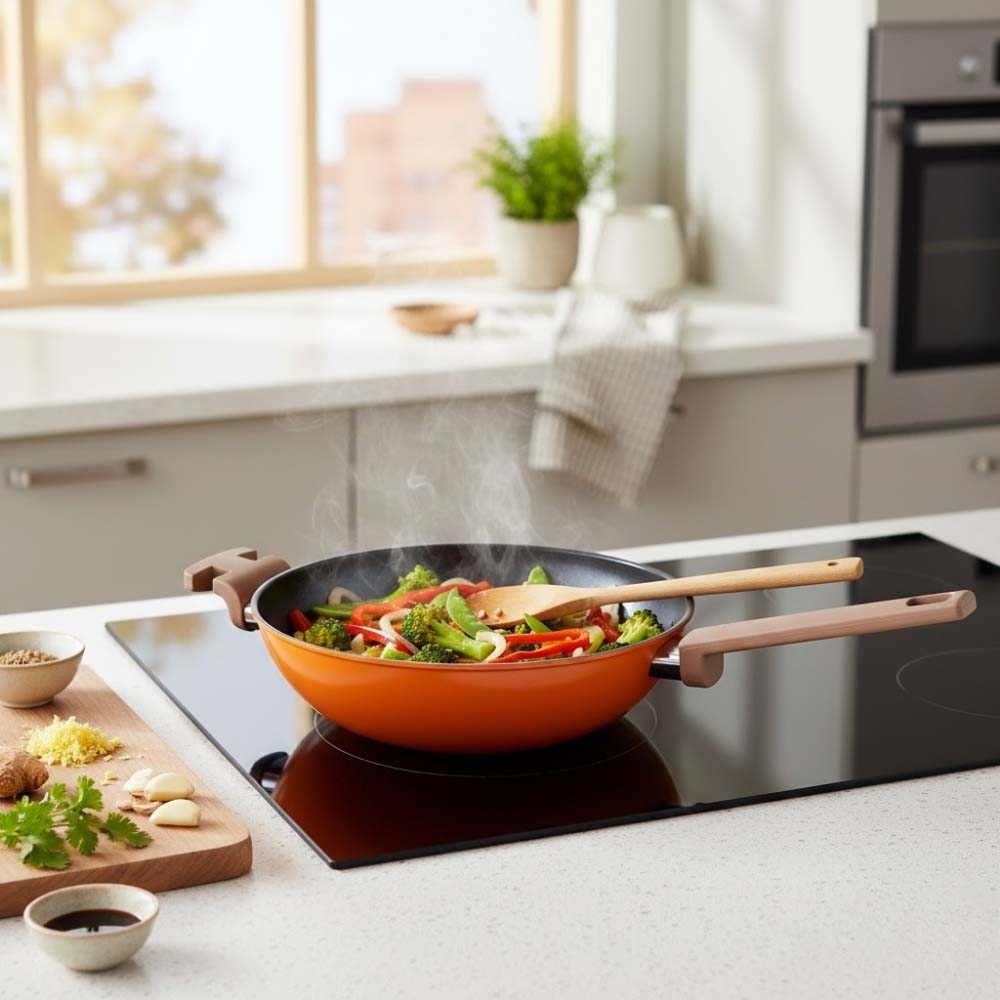
The best induction cookware for you depends on what dinner usually looks like, once compatibility is settled.
Stir-Fries With the Safico Pro 28cm Wokpan
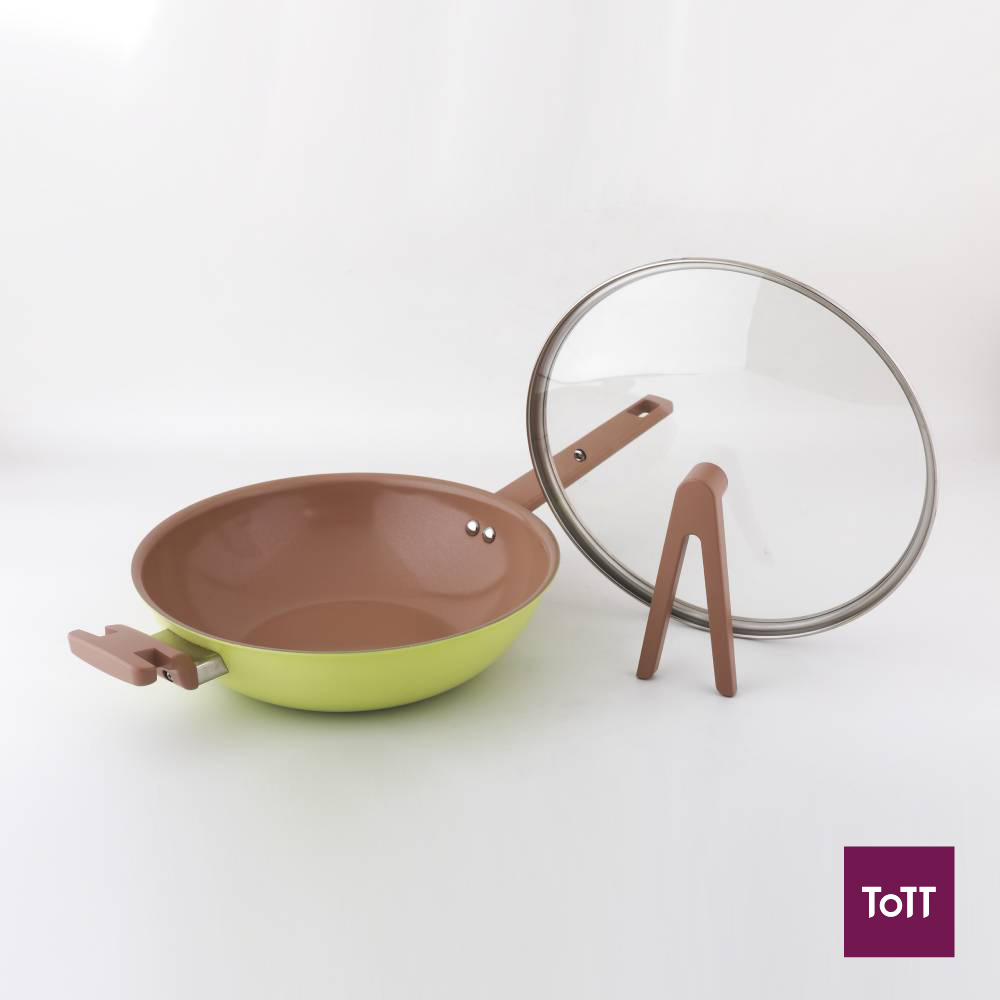
Fried rice and cabbage need room to move. The Safico Pro Orange Wokpan with Standable Handle measures 28cm across and 8cm deep, and costs S$42.95. It combines aluminium with a ceramic non-stick coating and an explicitly stated induction-compatible base.
When comparing woks, check the base width as well as the rim. Those measurements can differ considerably on a pan with sloping sides. Treat the coating gently rather than scraping it with a metal spatula, and follow the care instructions so your weeknight wok gets a fair run.
Everyday Frying With Safico Pro and Lava
Breakfast points you towards the Safico Pro 24cm Orange Frypan at S$24.45 or the 28cm version at S$28.95. Both have aluminium bodies, ceramic non-stick coatings and induction-ready bases.
The Lava 20cm Cast Iron Fry Pan with Metal Handle costs S$76.14 and holds 0.8L. Cast iron should pass the magnet test.
Our guide to frying pans by type [Link to Article 1] helps you choose between non-stick, stainless steel and cast iron based on what you cook most.
Covered Cooking With the Zebra Estio Pro 24cm Sauté Pan
A glass lid lets you keep an eye on simmering food without lifting it every minute. The Zebra Estio Pro 3-Ply Stainless Steel Sauté Pan includes one and costs S$70.70.
Its 24cm size is worth considering for chicken with mushrooms or vegetables in sauce. Many stainless steel bases are magnetic, but three-ply construction doesn’t prove it. Larger batches of soup call for a deeper pot.
Pots for Soups, Stocks and Rice Dishes
Choose depth and capacity around your usual portions rather than buying the largest pot that fits your budget.
You can compare stock pots and steamers once you’ve decided how much you normally cook. Leave space for stirring instead of treating the stated capacity as a fill line. Think about the complete meal, too. A soup pot and a wok need to sit beside each other without their handles fighting for the same space.
Soup Batches in the Safico 18-8 Stainless Steel Stock Pot
The Safico 18-8 Stainless Steel Stock Pot range starts at S$47.25. Its 5.4L option measures 20cm across and 19cm high, with SUS 304 stainless steel and a reinforced three-layer base. The listing explicitly includes induction use.
Consider that size for ABC soup or chicken stock. It comes without a lid, so include a matching one in your budget rather than discovering the omission halfway through cooking. Check the height against your cupboard shelf, especially if you plan to store it with the lid on.
Small Portions in the Safico Pro 18cm Saucepan
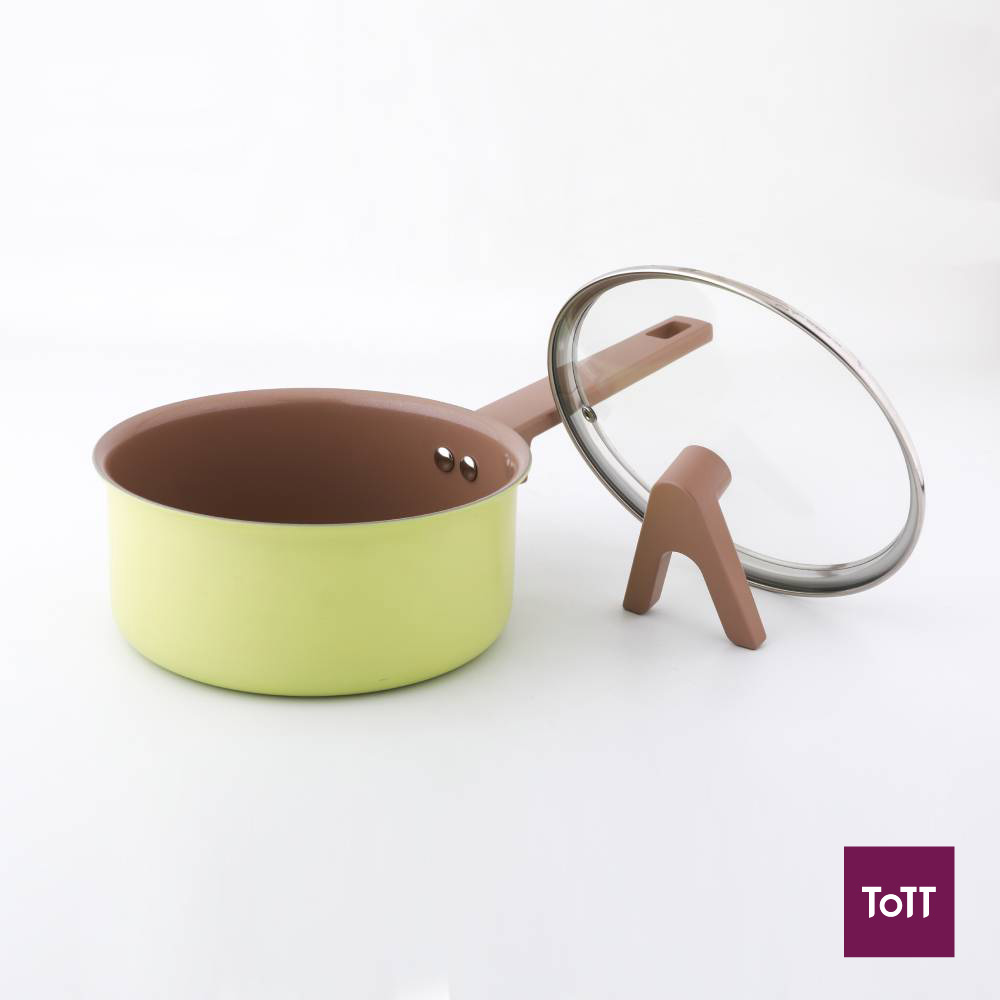
You don’t need to wash a stock pot to reheat two bowls of soup. The Safico Pro Green Ceramic Induction Saucepan holds 2L, measures 18cm across and costs S$29.95.
Its aluminium body has a ceramic non-stick surface and induction compatibility. Choose it for sauces or smaller portions of porridge, keeping the larger pot free for dinner.
Braises and Rice Dishes in the Lava 28cm Casserole
Give chicken and rice more room to spread out with the Lava Cast Iron Multi-Purpose Casserole with Dome Lid. The 28cm casserole holds 3.5L and starts at S$212.10.
Its enamelled cast iron retains heat, needs no seasoning and is explicitly listed for induction use. The trade-off is weight, particularly once dinner is inside. Check that you can lift it comfortably before committing to a size this wide.
Bring Your Hob Details When You Shop
Your hob model and base-size limits are more useful than a photo of the glass surface alone.
Bring those details, plus your cupboard measurements, when comparing cookware. Hold the handles and picture moving a full pot to the sink. You want enough room to cook without making every cupboard visit a rearranging exercise.
You may only need one new pot rather than a whole set, so talk to the ToTT team about replacing the pieces that won’t work on induction.
Frequently Asked Questions
Why Does a Pan Buzz During Cooking?
A mild buzz can come from vibration in the cookware, especially at higher power settings. Reduce the heat and check your hob manual if the noise changes or seems unusual.
Does Induction Compatibility Mean a Pan Is Oven-Safe?
No, the magnetic base tells you nothing about the handle or lid’s heat limits. Check the exact product’s separate oven instructions before moving it off the hob and into the oven.
Can You Use Boost for Everyday Cooking?
Treat boost as a short burst for jobs such as bringing water to the boil, rather than the setting for every meal. Follow your hob’s instructions and keep an eye on the pan, especially when cooking with oil.
Will the Glass Stay Cold Under the Pan?
No, heat from the pan can warm the glass beneath it. Let the area cool and follow the residual-heat indicator before wiping up spills.